New sprinklers, a pool or a change in how a building is used can all call for a backflow device. We check what your district wants, pick the right type and size, and install it with room to test. The startup test and the first report are included.
Want it done this week? Call or book online.
- PriceFree quote
- TimeUsually 1 day
- TestIncluded
- FilingIncluded
When a new install comes up
- You're adding a new water service
- You're putting in irrigation
- The building's use is changing
- You got a letter saying a device is required
Backflow Installation services
Backflow Preventer Installation
Choosing and installing the right backflow preventer for your property. We match the device to the hazard your district identifies, size it for your water use, handle permits when needed and file the first test report. Free quote after we confirm what your district requires. Most installs are finished in a single day. More about backflow preventer installation.
Backflow Assembly Installation
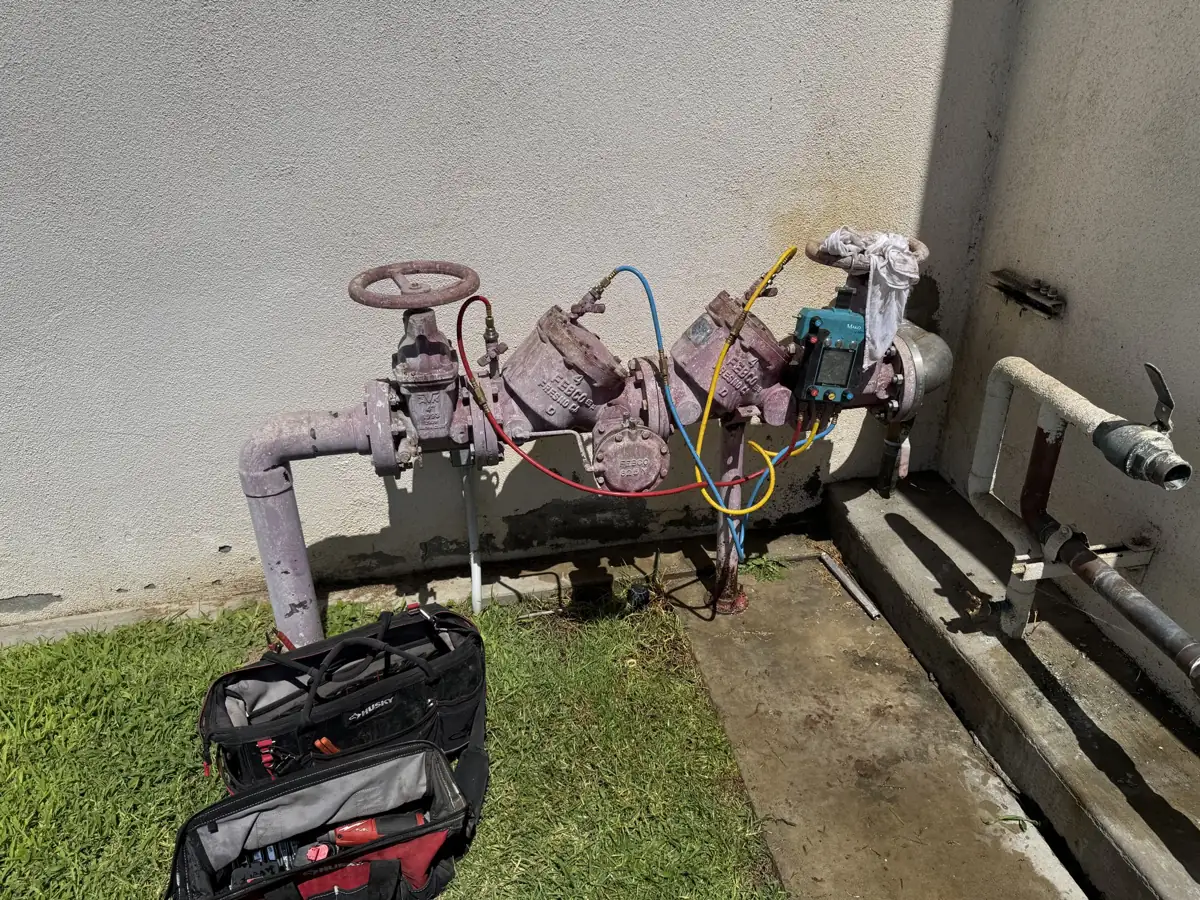
Backflow assemblies installed to code, with the right height, drainage and clearance for yearly testing. RPs above ground, vacuum breakers above the highest outlet, and cages or covers where theft or freezing is a risk. The startup test and first district report are included. Most installs for 2-inch and smaller devices take one day. More about backflow assembly installation.
How it works
Site visit
We confirm type and size.Approvals
Permits if needed.Install
Usually one day.Test & file
Report sent to your district.
Picking the right device
The first step is knowing what your district requires. The hazard at the connection sets the type: RPs for high-hazard uses such as clinics and car washes, double checks for many lower-hazard lines, and PVBs or SVBs for irrigation exposed only to backsiphonage.
Then we size it. Too small and you lose pressure. Too large and you pay more for no benefit. Homes typically take 3/4-inch or 1-inch devices, and commercial and fire lines often need 2 inches or more.
Choosing correctly up front saves you from a costly redo if the district turns the first device down.
Built for easy testing and repair
A backflow device isn't a one-time install. It'll be tested every year for as long as it's in place, and repaired from time to time. We install with that in mind.
RPs go above ground with room for the relief valve to drain. Vacuum breakers sit higher than every outlet they protect. Every device gets enough clearance for test hoses, shutoff valves and check covers.
Where theft or freezing is a risk, we'll suggest a locking cage or insulated cover. The goal is a device that passes its first test and stays easy to work on for years after.
From quote to first report
It starts with a visit or a few photos so we can confirm the connection, hazard and space. You get a free quote that includes the device, the installation and the first test.
If the district or city needs plans or a permit, we'll tell you upfront and build it into the timeline. Most residential and small commercial installs are done in a day.
Once the device is in and the line is flushed, we test it and file the first report with your water district. That puts it on record and sets the first annual due date. You get a copy, and we can remind you when next year's test is coming up.
New devices at houses
Homes usually need a new device for sprinklers, pool fill lines, wells or residential fire sprinklers. Most are 3/4 inch or 1 inch and go in within a day.
We choose a location that follows the placement rules and stays accessible for testing, then test it and send in the first report.
Larger projects
Commercial installs and new construction often involve plans, permits, larger devices and coordination with other contractors. Fire lines usually need detector assemblies sized 4 inches and up.
We work to your project schedule and make sure the startup test is filed before final inspection.
Changes of use and new equipment
Adding a new boiler, a fertilizer injector, a car wash bay or medical equipment can change the hazard level at a connection. So can converting a space from one kind of business to another. When that happens, the district may require a new or different backflow device.
If you're planning a change like this, call before the work starts. Getting the right device in the plan from the beginning is cheaper than adding it after an inspection flags it.
Not sure whether you need a new device at all? Send us a photo of the area and a short description of the project. We'll tell you whether a backflow device is likely required, what type and roughly what it would take, before you commit to anything. Quotes are free, and most homes and small businesses are done in a single day.
Questions
Which type do I need?
Your water district decides based on how the water is used. We confirm it before we quote.
How often does a backflow preventer need to be tested?
Once a year at minimum. A device also needs testing right after it's installed, repaired or moved. Your water district picks the due date and normally mails a reminder ahead of time.
Why people around Inglewood call us
We're a local company and backflow prevention is our focus. Every test is done by a certified tester with a calibrated gauge, and filing with your water district is part of the price, not an extra.
You'll know the cost before we start: $105 for devices under 4 inches, $175 for 4 inches and up, and free quotes for everything else. The office answers seven days a week, 6am to midnight, and emergency calls are taken around the clock.
Most of our customers are homeowners with one device on the sprinkler line, but we also test for landlords, HOAs, churches, schools and shops around Inglewood. Whoever you are, the visit works the same way: we call ahead, test the device, explain anything that came up, and send the report to the district before the day is out. If something needs fixing, you decide whether and when.
Serving Inglewood and the towns next door
We handle backflow installation in Inglewood, Lennox, View Park-Windsor Hills, Ladera Heights, Westchester and Hawthorne. Most visits are booked within the week.